
Most people who hear about Wixárika spirituality only hear about Wirikuta.
Wirikuta is sacred, powerful, and deeply important. It is the desert connected with hikuri, pilgrimage, prayer, and the birth of the sun. But Wirikuta is not the whole story.
The Wixárika spiritual world is not centered on only one place. It is connected through a larger sacred geography — lands, waters, mountains, deserts, and ceremonial places that form a living map of relationship between people, nature, ancestors, and spirit.
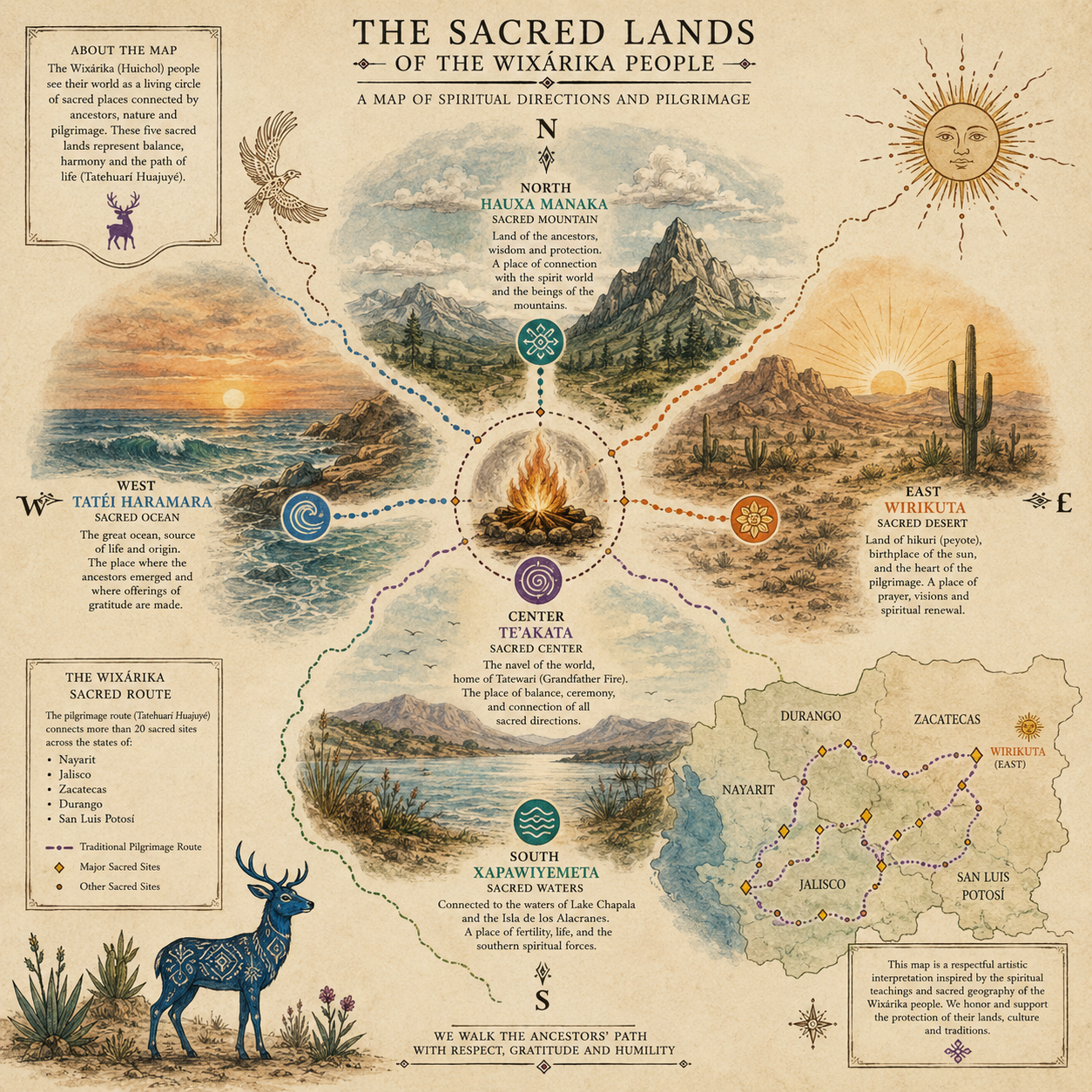
In 2025, UNESCO recognized the Wixárika Route through Sacred Sites to Wirikuta as a World Heritage site, describing it as a route of 20 sacred sites stretching more than 500 kilometers through Nayarit, Jalisco, Zacatecas, Durango, and San Luis Potosí.
This matters because it reminds us of something important:
Wirikuta is not isolated. It is part of a sacred world.
Why People Only Talk About Wirikuta
Wirikuta gets the most attention because it is connected to peyote, pilgrimage, and the desert. It is easier for outsiders to focus on one famous place than to understand the full Wixárika worldview.
But when we only talk about Wirikuta, we risk reducing a living tradition into one image: peyote in the desert.
The deeper truth is that the Wixárika relationship with land is much bigger than that.
The sacred places are not just “locations.” They are living spiritual centers. They represent balance, direction, memory, offering, and responsibility.
The Sacred Geography of the Wixárika World
The Wixárika people recognize sacred places connected with directions and spiritual forces. These include:
- Wirikuta in the east
- Tatei Haramara in the west
- Hauxa Manaka in the north
- Xapawiyemeta in the south
- Te’akata in the center
Together, these places form a sacred map.
Each place carries its own meaning. Each place teaches something different.
Wirikuta: The Sacred Desert of the East
Wirikuta is the most well-known sacred land.
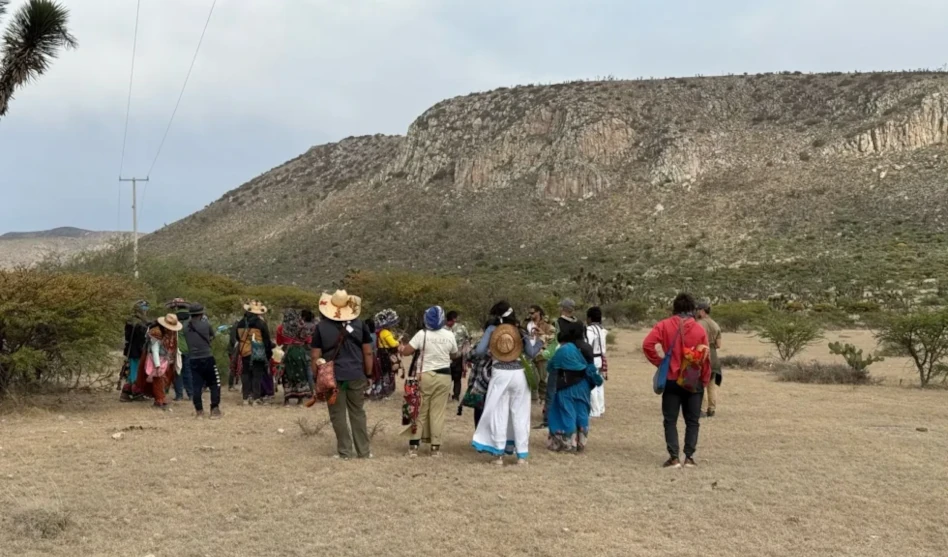
It is located in the desert region of San Luis Potosí and is connected with the sun, pilgrimage, hikuri, and spiritual renewal. For many Wixárika pilgrims, the journey to Wirikuta is not tourism. It is ceremony, responsibility, prayer, and connection with the ancestors.
The desert teaches through silence.
It removes distraction. It humbles the body. It brings people face to face with hunger, cold, heat, exhaustion, and prayer.
But Wirikuta should not be treated as a spiritual product. It is a sacred place that deserves respect, protection, and humility.
Tatei Haramara: The Sacred Ocean of the West
Tatei Haramara is connected with the Pacific Ocean.
While Wirikuta is often associated with the desert, Tatei Haramara reminds us that Wixárika sacred geography also begins with water, origin, and the mother ocean.
The ocean is not just scenery. It is a spiritual presence.
It represents life, birth, movement, and the mystery that existed before human beings tried to explain everything.
For someone walking a spiritual path, Tatei Haramara teaches that life does not begin with control. It begins with surrender.
The ocean cannot be forced. It must be listened to.
Hauxa Manaka: The Sacred North
Hauxa Manaka is one of the sacred places connected with the north.
The north can be understood as a direction of strength, memory, ancestors, and spiritual protection.
Mountains often carry a feeling of endurance. They stand through generations. They witness time in a way humans cannot.
In this way, Hauxa Manaka reminds us that spirituality is not only about visions or ceremonies. It is also about responsibility, patience, and continuity.
A real spiritual path is not something you pick up for a weekend.
It is something you carry.
Xapawiyemeta: The Sacred South
Xapawiyemeta is associated with the south and is often connected with water, balance, and sacred life.
This place reminds us that the spiritual world is not separate from the natural world.
Water, lakes, rain, fertility, food, animals, and people are connected.
Modern society often teaches people to see land as property and water as a resource. Sacred geography teaches something different:
The earth is not dead.
The earth is relationship.
Te’akata: The Sacred Center
Te’akata represents the center.
The center is important because without a center, the directions lose balance.
Spiritually, the center can remind us of fire, home, ceremony, and grounding. It is the place that holds everything together.
This is powerful because many people today are spiritually scattered. They chase answers everywhere but have no center inside themselves.
Te’akata reminds us that the sacred path is not only about traveling outward.
It is also about returning inward.
Why These Sacred Lands Matter Today
The modern world is full of disconnection.
People are disconnected from land, from silence, from ancestors, from ritual, from community, and sometimes from themselves.
The Wixárika sacred lands remind us that a human being is not separate from nature.
The desert, ocean, mountain, lake, and fire are not just symbols. They are teachers.
This is why it is important to speak about more than Wirikuta.
When we only talk about Wirikuta, we miss the larger teaching:
A sacred life is built through relationship with the whole world, not just one place.
A Personal Reflection
For me, learning about these sacred places has changed the way I see pilgrimage.
At first, it is easy to think pilgrimage is only about arriving somewhere.
But the deeper lesson is that every direction has meaning.
The east teaches awakening.
The west teaches origin.
The north teaches strength.
The south teaches balance.
The center teaches grounding.
Together, they remind us how to walk through life with more respect.
Not rushing.
Not taking.
Not pretending to know everything.
Just listening.
Sacred Symbols and the Spirit of the Blue Deer
The Blue Deer has become a powerful symbol in my own journey.
To me, it represents guidance, mystery, humility, and the call to keep walking the path with respect.
The designs, artwork, and handmade pieces connected to The Spirit of the Blue Deer are inspired by this larger journey — not as decoration only, but as reminders of prayer, discipline, nature, and transformation.
If this reflection speaks to you, you can explore pieces inspired by the Blue Deer, desert pilgrimage, sacred directions, and spiritual transformation in my Etsy shop.
Explore the Spirit of the Blue Deer Collection
Final Thoughts
Wirikuta deserves respect.
But Wirikuta is not alone.
It belongs to a larger sacred geography that includes ocean, mountain, water, fire, desert, and center.
To understand this is to move beyond curiosity and closer to respect.
The sacred lands of the Wixárika people remind us that the earth is not just a place we live on.
It is a place we are in relationship with.
And maybe that is one of the teachings modern people need most.